No brief, no client – a week to test myself against a world I love. 260k people showed up.
I built this the week after the Witcher IV trailer dropped – not as a portfolio piece, just to answer a question I couldn't stop thinking about: Ciri isn't a witcher the way Geralt is – she trained at Kaer Morhen but never took the trials, and her power is Elder Blood rather than a brewed mutation. So what should her interface actually feel like? When it was done I put it in front of the harshest audience available – series fans who'd reject anything that felt off-brand. It reached 260k views.
The starting point was the cinematic trailer shot of Ciri charging a monster from an angle that almost felt like gameplay – the only reference that existed, before any gameplay footage was out. I used that as a constraint: what would the HUD, sign switching, and progression screens need to communicate if the game moved faster and felt more physical?

Combat UI
I started with the HUD because this is where player habit, combat readability, and fantasy meet. The Witcher already has strong interface memory, so the goal was not to redesign it for novelty.
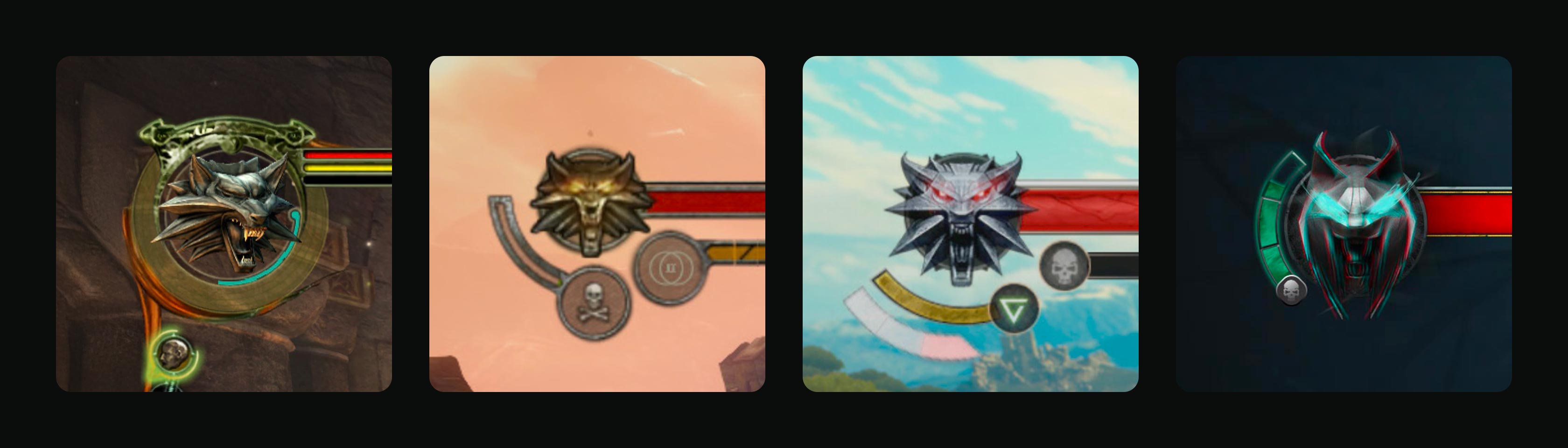
The biggest visual shift is the move from earthy browns toward a colder blue palette. It creates distance from the Geralt-era UI while still feeling grounded in the same world.
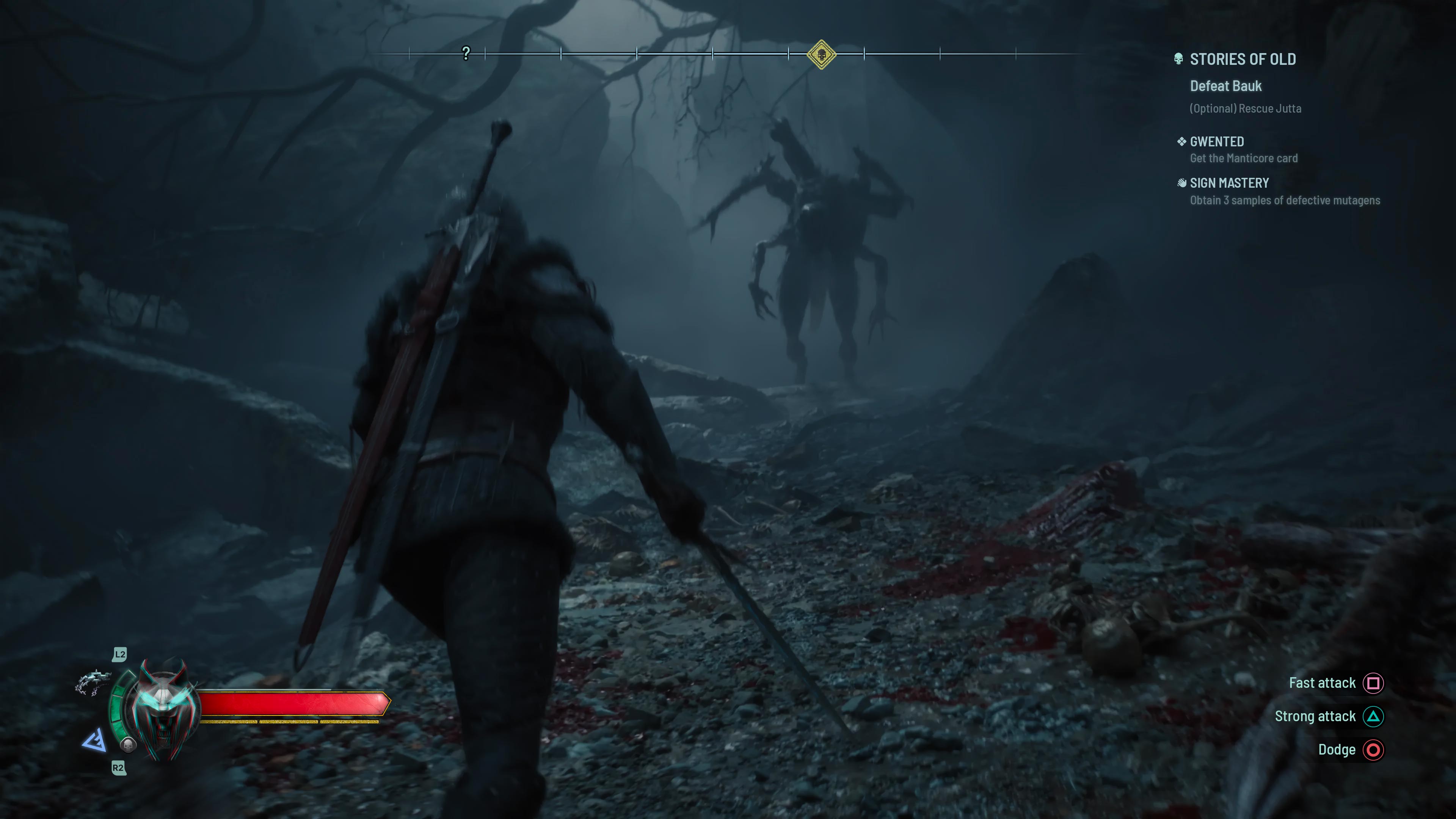
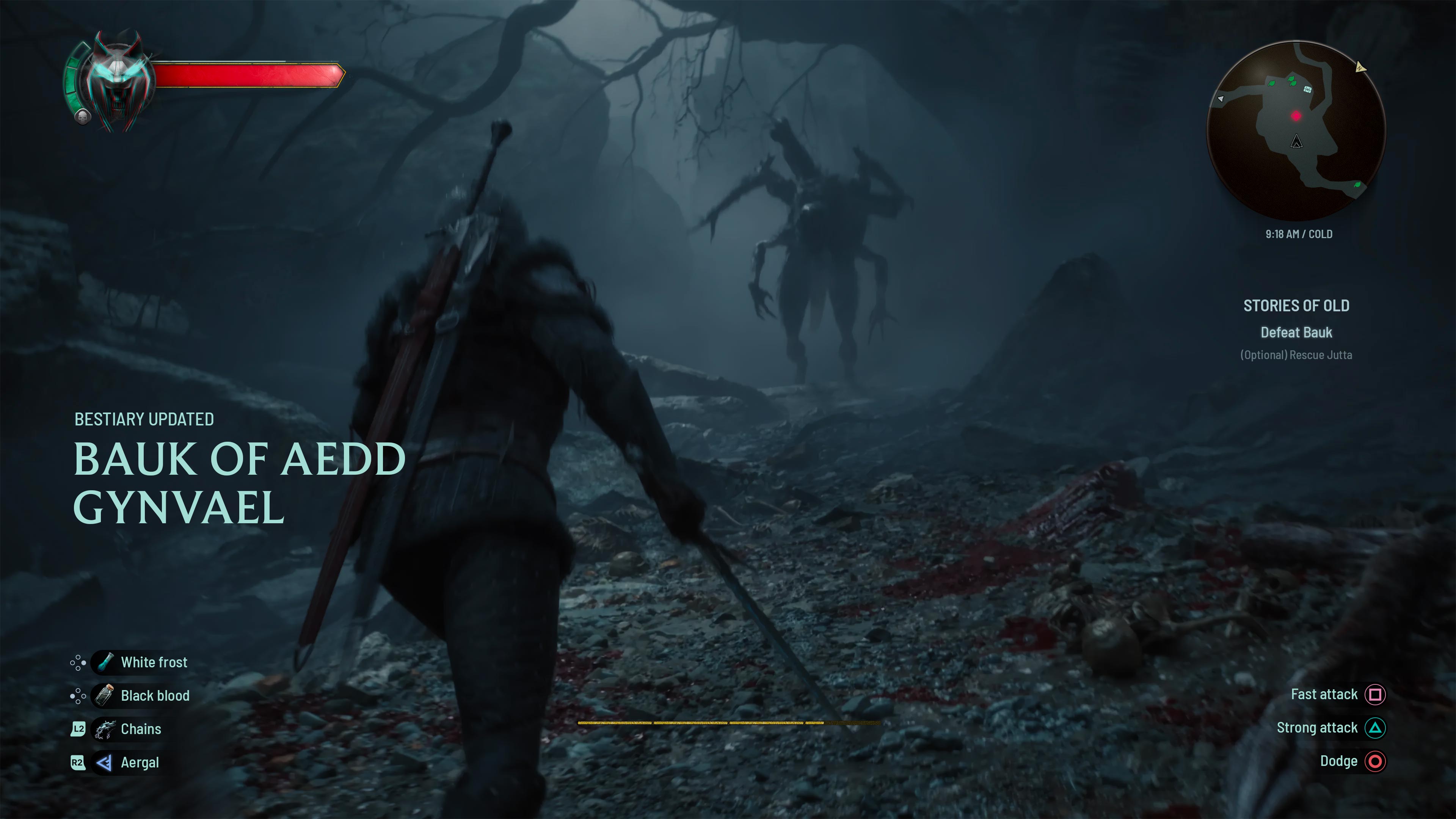
I explored two directions: traditional and minimal. The minimal version is cleaner, but for this concept I would lean traditional. The Witcher is dense and atmospheric; the UI can carry some of that weight as long as it does not fight the action.
The HUD is divided into five main areas:
- Top left: Witcher medallion and health bar
- Top right: Navigation
- Bottom left: Items and consumables
- Bottom right: Combat and interaction prompts
- Bottom center: Stamina or status effects
The medallion and health bar stay in the top left. I considered moving them closer to the action, but in this case the familiar placement matters. It gives returning players an immediate sense of home before the new systems start asking for attention.
Navigation should guide, not drag the player forward
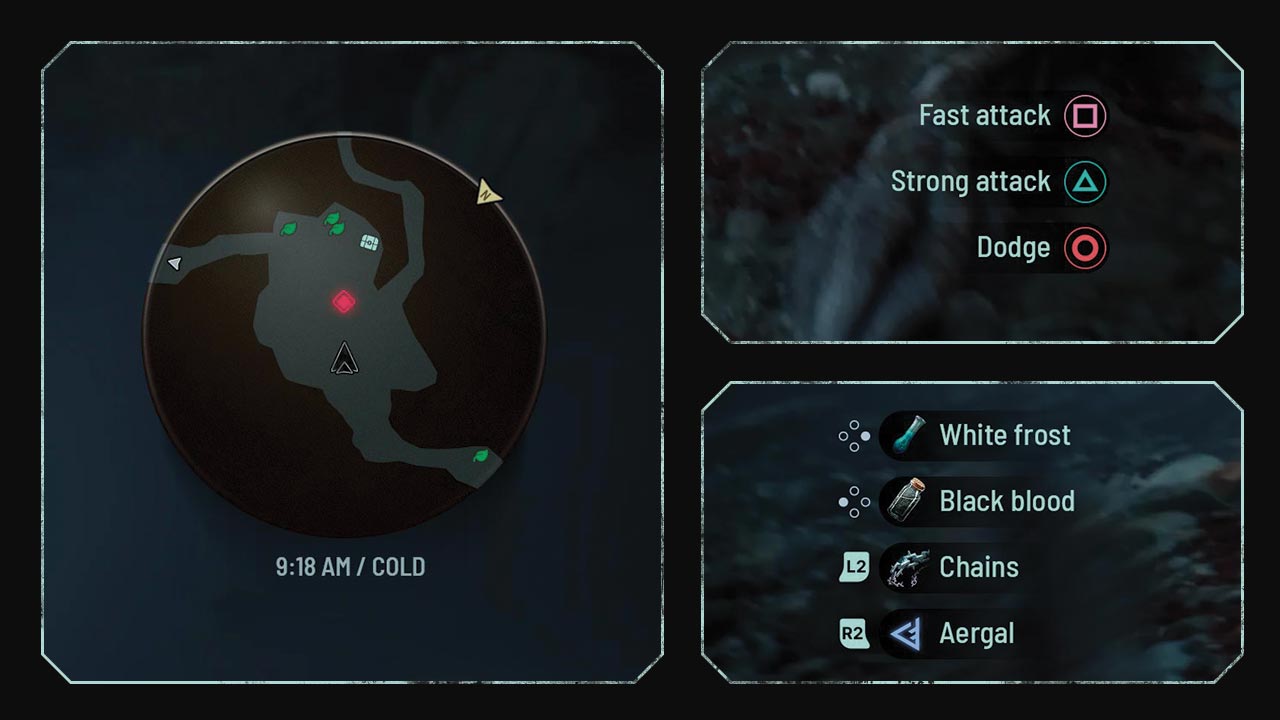
The map is essential, but it can easily make exploration feel too prescribed. I would explore a more flexible navigation layer: fewer permanent markers, stronger optional toggles, and a reduced-HUD mode for players who want to read the world instead of follow icons. It would only work if the quest and level design supported it, but that is exactly why it interests me.
Items should feel familiar, with one clear new signal
The items in the bottom left follow a similar structure to The Witcher 3. I added gamepad input hints because many players return for the story and take long breaks between sessions. I also replaced the crossbow with the chains shown in the trailer. If this is a new Ciri weapon, it deserves to be visible early in the interface language.
 Minimal
 Traditional
The controls in the bottom right change with the situation. In combat they show available actions; in calmer spaces they become contextual interactions. I like this approach because it keeps the interface tied to what the player can do right now.
The final HUD change is the placement of stamina and status effects. In The Witcher 3, stamina lived near the medallion. It was tidy, but it also pulled the eye away from combat.
I moved stamina to the bottom center so it stays closer to peripheral vision. The bar remains segmented into four parts, keeping continuity with the previous game. Status effects sit above it: visible enough to matter, but not so central that they cover the fight.
Talent tree
The talent tree was the natural next step because it brings together many pieces of game UI: tabs, tooltips, locked states, character stats, progression, and discovery.
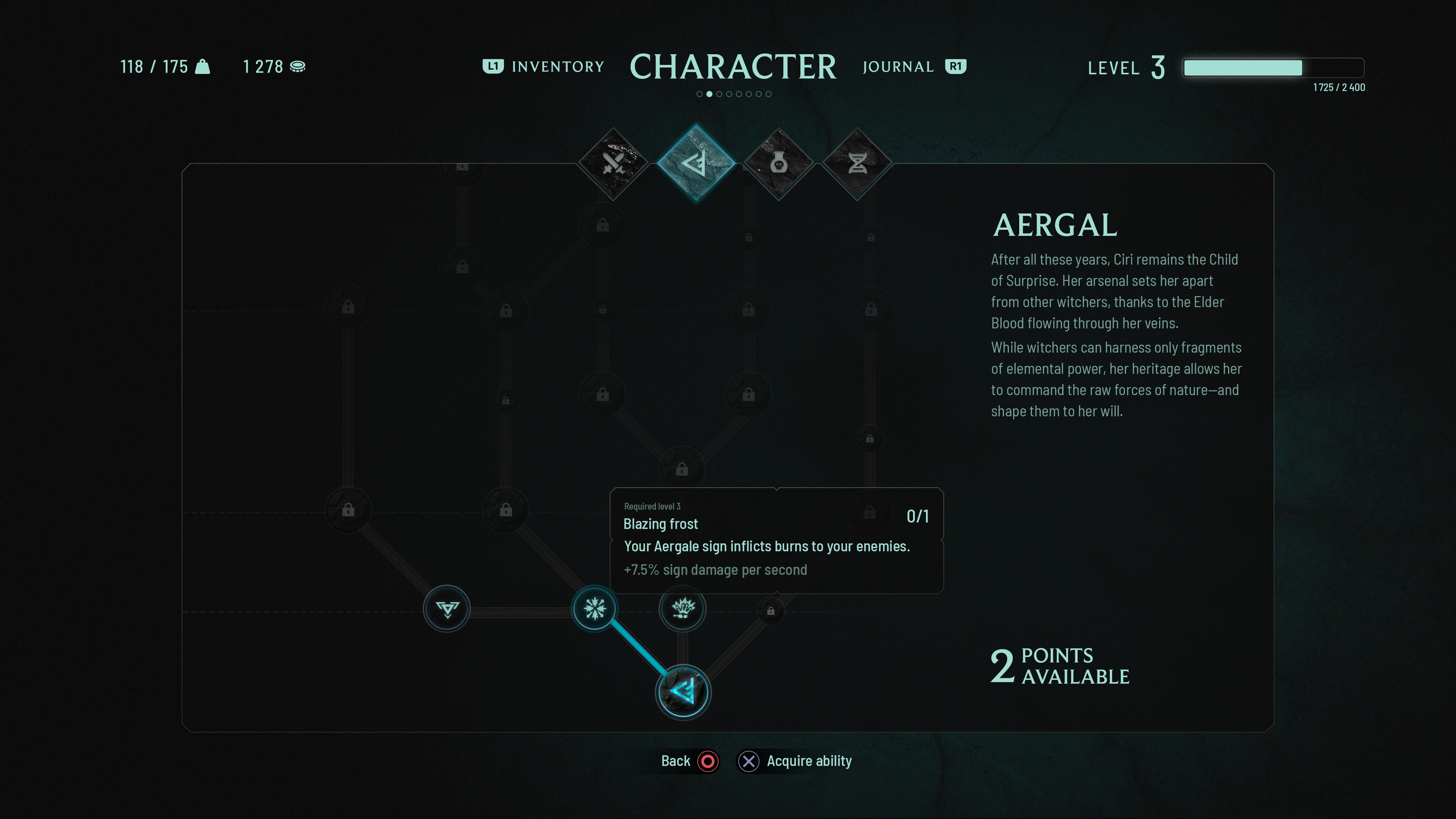
The layout takes inspiration from both The Witcher 3 and Cyberpunk 2077. Cyberpunk’s tabs are clear and efficient. The Witcher 3 feels more restrained and atmospheric. I tried to combine both: readable navigation, but with a calmer composition that still belongs in a dark fantasy game.
For this concept, the tree is divided into four categories: swords, signs, alchemy, and mutagens.
I grouped all signs into one area because I wanted them to feel like something the player studies and uncovers, not just a set of abilities available from the start. Some signs could unlock through key encounters, level progress, or specific prerequisites.
The medallion as a living UI element
I explored an animated medallion that reacts to its environment: trembling near monsters, pulsing during active combat, and stilling when the world around Ciri is calm. The goal is to give the medallion a role in gameplay communication – not just visual identity. It works as a secondary health and threat signal that doesn't require the player to look at any specific part of the screen.
This could work similarly to gear hunts in The Witcher 3, where progression is tied to the world instead of only to menus. A sign upgrade could come from a quest, a monster, a place, or a piece of forbidden knowledge.
Ciri’s version of the signs is built around Aergal. In the trailer, she combines water and lightning, which hints at a more unstable and physical kind of magic. I would use that in the UI too: some high-level abilities could stay obscured until discovered, so the interface itself keeps a little mystery.
Community reception